Carnivorous Plant Care for September 2009

September 4th, 2009

North American Carnivorous Plants
* In some northern regions, it is not unusual to experience the first frost of the season by the end of the month.  If so, avoid bringing your temperate carnivorous plants indoors.  The frost is their signal to prepare for winter dormancy.

* Collect your flytrap seeds. Sow them now before the first frost hits, or place them in the refrigerator for sowing next spring. Germination will occur within 3 weeks.

* Sarracenia seedpods will continue to develop.  You can look forward to harvesting Sarracenia seeds in October and November, depending on your climate.

* Look for spectacular leaves on your pale pitcher (Sarracenia alata), white top trumpet (Sarracenia leucophylla), hooded pitcher (Sarracenia minor), and parrot pitcher (Sarracenia psittacina). Dana’s Delight and Scarlet Belle hybrids will also produce their best leaves of the season in September and October.

* Both the yellow trumpet (Sarracenia flava) and the green pitcher (Sarracenia oreophila) will produce non-carnivorous winter leaves (phyllodia). Their main pitchers will slowly turn brown as they head into dormancy a bit earlier than other pitcher plants.

* Trim off dead leaves.

* Give your plants full sun and keep their water trays filled.


Tropical Carnivorous Plants

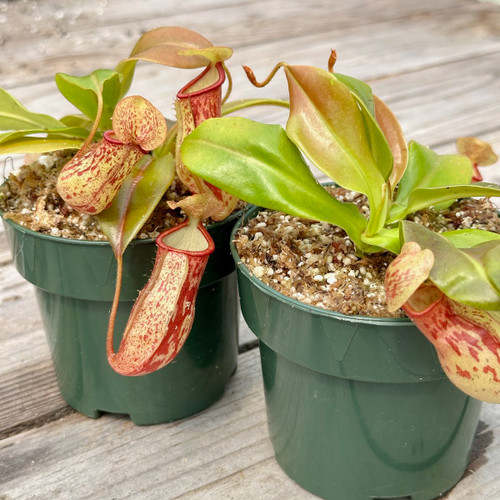
* If you have been growing your tropical carnivorous plants outdoors, monitor your nighttime temperatures.  If the nighttime temperature approaches 50°F, it may be time to bring your tropical plants indoors.  Before doing so, however, inspect them for pests. If necessary, spray them with a water-based insecticide, such as pyretrhin or neem. Always follow the directions provided by the manufacturer.

* When bringing your plants indoors, place them in a window that has similar lighting to what they were getting during the summer.  If necessary, use strong fluorescent lights.  Use either tubes or compact fluorescent bulbs with a minimum rating of 40 watts or 3000 lumens.

* Make sure your plants are watered appropriately.

Carnivorous Plant Serpent of the Siskyous: Darlingtonia californica

August 6th, 2009

Darlingtonia californica is one of many carnivorous plants native to the West Coast. If you think that Darlingtonia grows mostly in the cool coastal regions of Oregon, think again!  The vast majority of Darlingtonia grows in the mountains of southern Oregon and northern Californica.

In late July, we traveled to southern Oregon to document Darlingtonia growing in the Siskiyou National Forest.  We filmed some rarely seen habitats that go against the conventional wisdom that Darlingtonia needs constant high humidity and cool temperatures.

The video is under 9 minutes, but it’s packed with lots of interesting footage about their growing conditions.  We also recorded data, such as air temperature, soil temperature, water temperature, relative humidity and water hardness.

Carnivorous Plant Care for August 2009

August 6th, 2009

North American Carnivorous Plants
• Flower stalks on Venus Flytraps will now turn black. In late August and early September, you will be able to collect seeds.

• Sarracenia, flytraps and sundews are well adapted to summer heat. Some plants will slow down temporarily during the hottest parts of summer.

• Sarracenia seedpods are now developing. They will be ready for harvest in late summer through mid fall, depending on your region.

• Pitcher plants will slowly fill up with insects. Brown spots will occur along the pitcher. This is perfectly normal. It means that your plant is indeed capturing bugs!

• It is not unusual for certain varieties of white top pitchers (Sarracenia leucophylla) to produce non-carnivorous leaves in August. It is their way to adapt to hot dry conditions.  Look for normal pitchers in September.

• Both the yellow trumpet (Sarracenia flava) and the green pitcher (Sarracenia oreophila) will produce non-carnivorous winter leaves (phyllodia). Their main pitchers will slowly turn brown as these plants tend to head into dormancy a bit earlier than other pitcher plants.

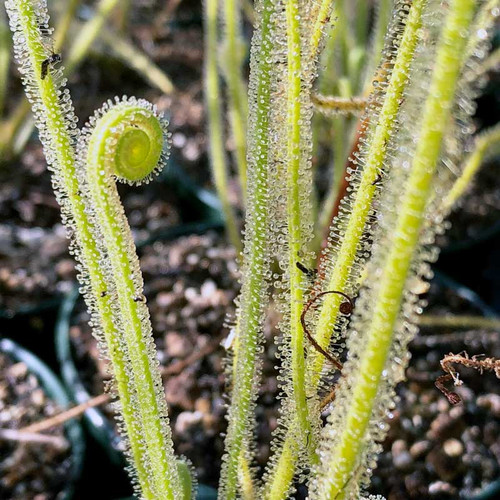
• Sundews will be heavily specked with insects.

• Give your plants full sun and keep their water trays filled.

• If you are planning a vacation this month, make sure you have someone water your plants for you. Water trays can dry up quickly during hot summer days.

• Pay attention to aphids. Usually aphid damage shows up as disfigured leaves and pitchers.  If you suspect aphids, spray your plants with organic compounds, such as pyrethrin or neem.   All garden centers carry prepared solutions of these compounds.  If the infestation is severe or frequent, talk with your local garden center for a topical systemic insecticide that’s appropriate for your region.  (Some states ban certain systemic compounds, so you’ll need to check with your local suppliers.)  As always, follow the directions supplied by the manufacturer.

• Slugs also love to munch on new growth.  To control these pests use slug bait.  However, slug bait is toxic to carnivorous plants, so never place it on the soil surface of your carnivorous plants or in the water trays.  Place it only around the water trays.  If you have pets, use Sluggo®.  This particular brand of slug bait is safe to use around pets and wildlife. Follow the instructions provided by the manufacturer.

Tropical Carnivorous Plants
• If you want to move your tropical carnivorous plants outdoors, you may do so now.  However, consider that plants prefer stable conditions.  When moving from indoors to outdoors, your plants may need as much as a month to acclimate to its new conditions.  Later in the year, your plants will be moving back indoors and will need additional time to acclimate.  During this acclimation process, plants may stop producing dew or pitchers.
In most situations, tropical plants do better remaining in your home even during the summer months.

• If you decide to move your plants outdoors, place them in an area where they can receive direct early morning sunlight or bright indirect light for most of the day. Shelter them from the afternoon sun. After a couple of weeks, you may move them to a brighter location, according to what they need.

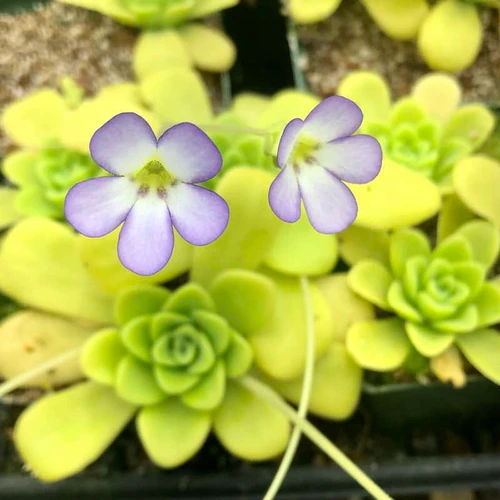
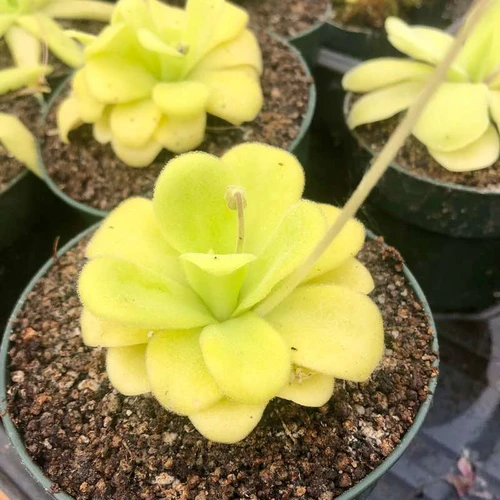
• Avoid putting Mexican butterworts (Pinguicula sp.) and lance leaf sundews (Drosera adelae) outdoors. For most of North America, outdoor conditions can be a bit rough on these slightly sensitive plants.

• When growing tropical plants outdoors, make sure they are watered appropriately.

• Tropical plants are also prone to pests, such as aphids, thrips and scales. Always take immediate action if you see any of these pests or suspect pests may be a problem.  Pests can get out of control quickly in the home.  To treat pests, spray your houseplants with organic compounds such as pyrethrins or neem.  Check with your local garden center for prepared solutions, and follow the directions supplied by the manufacturer.

Carnivorous Plants - Cephalotus follicularis

July 26th, 2009

Cephalotus follicularis is one of many carnivorous plants native to Australia. This video showcases how the plant is pollinated by ants. All footage of the ant is the same ant throughout the video. I found the ant running around the flower stalks when I was about to hand-pollinate the flowers myself. Ants are common prey with Cephaltous in the wild, so it’s not at all unusual for it to be common pollinators.

Ask the Carnivorous Plant Guys - Episode 7

June 25th, 2009

This is where we answer your questions to help you grow better carnivorous plants. How do you pollinate a Sarracenia flower? Jeff shows you the anatomy of a flower and the simple process to pollinate your own flowers.